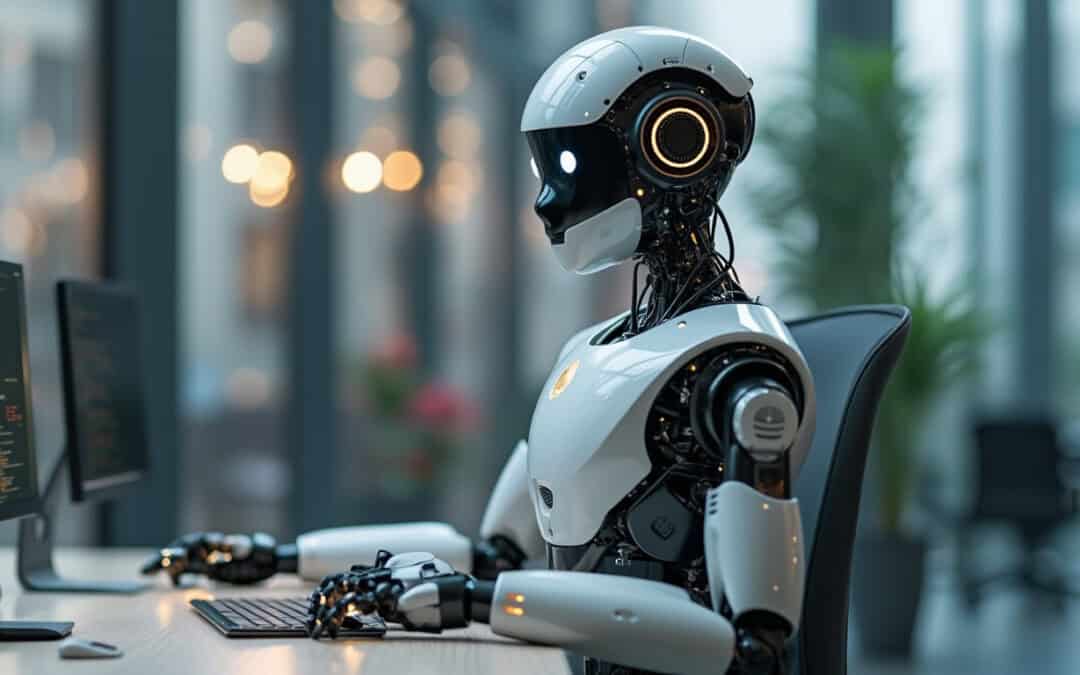
Introduction to AI Automation
As you might already know, AI automation refers to the use of artificial intelligence technologies to automate tasks that were traditionally performed by humans. This phenomenon is becoming increasingly significant in today’s fast-paced and technology-driven workplace.
By streamlining processes, enhancing productivity, and providing deeper insights through data analysis, AI automation is revolutionizing how businesses operate.
In this context, the phrase “AI automation and the future of work” resonates strongly as organizations look for innovative ways to stay competitive.
This article aims to explore various facets of automation—its current applications, impact on employment, and the necessary strategies for adapting to this rapidly evolving landscape.
As we embark on this discussion, we will highlight not only the advancements AI brings but also the changes it necessitates in our professional environments and daily tasks.
Current Applications of AI Automation in Various Industries
Different sectors are currently leveraging AI in remarkable ways, enhancing efficiency and transforming operational dynamics.
For instance, in manufacturing, AI-powered robots and machines execute repetitive tasks, resulting in higher production rates and improved quality control.
These automated systems can work around the clock, reducing downtime and elevating output standards. A notable example is Tesla’s use of AI automation on their assembly lines, which has accelerated vehicle production while minimizing errors.
In the healthcare sector, AI automation is reshaping patient care and administrative processes. Tools like machine learning algorithms are being used to analyze patient data for more accurate diagnoses and personalized treatment plans.
For example, IBM’s Watson can process vast amounts of medical literature to assist in identifying suitable therapies for cancer patients. Such technology not only enhances patient outcomes but also frees up healthcare professionals to focus on direct patient interactions.
The finance industry also reaps benefits from automation, particularly in risk assessment and fraud detection. AI can analyze transaction patterns to flag suspicious activity that might go unnoticed by human analysts.
Firms like American Express employ smart algorithms to monitor real-time transactions, significantly reducing fraud losses. These advancements not only protect consumers but also reduce operational costs for financial institutions.
Retail is yet another sector rapidly embracing AI automation.
Companies like Amazon utilize artificial intelligence for inventory management, customer insights, and personalized marketing. AI-driven recommendation engines enhance shopping experiences while optimizing stock levels based on predictive analytics.
These examples underscore the myriad benefits automation brings across various industries, leading to greater productivity and cost savings while driving innovation.
How AI Affects Your Industry?
Implementing AI and automation will have benefits for any industry if done correctly. We specialize in building custom AI solutions for businesses in any niche. Read about our mission at ProcessPup.
The Impact of AI Automation on Employment
AI automation is undeniably reshaping the landscape of work, leading to profound changes in job roles and career trajectories.
With its ability to perform repetitive tasks, AI technology is taking over roles that were traditionally human, leading to fears of job displacement.
In manufacturing, robots and automated systems efficiently manage assembly lines, reducing the number of manual workers required. However, it’s crucial to balance this narrative with the understanding that AI is also fostering new opportunities that didn’t previously exist.
The World Economic Forum projects that while 85 million jobs may be displaced by 2025 due to the integration of automation technologies, over 90 million new roles could emerge, highlighting a shift in demand towards tech-savvy positions.
Moreover, sectors like healthcare and finance are witnessing an evolution in roles as AI systems take over mundane tasks such as data entry and analysis. In these fields, professionals are now shifting towards roles that require interpretation of data and decision-making.
Statistics indicate that approximately 42% of jobs in the United States could be automated by the mid-2030s, according to research from McKinsey. This data suggests the urgency for workers to adapt and evolve alongside these innovations.
The key takeaway is that instead of fearing job loss, individuals should view AI and automation as an opportunity for personal and professional growth, pivoting to roles that require creativity, emotional intelligence, and strategic thinking.
Employers and employees alike must prepare for this transition by investing in education and skills development that align with the innovative demands of the future workforce.
Preparing for a Future with AI Automation
As AI automation continues to redefine the workplace, it is essential for workers to proactively adapt to these changes.
One of the most effective strategies is to embrace reskilling and upskilling. In a rapidly changing job landscape, acquiring new skills that complement AI technologies will be crucial.
Online learning platforms like Coursera and LinkedIn Learning offer a multitude of courses tailored to help individuals enhance their technical knowledge, critical thinking, and problem-solving abilities.
Additionally, networking with industry professionals and seeking mentorship can provide valuable insights and connections that aid in navigating the evolving job market.
Attending workshops and industry conferences can further enrich skill sets while fostering a community of like-minded individuals committed to growth and learning.
Businesses, on the other hand, can invest in training programs that help current employees adapt to new technologies, fostering a culture of continuous learning.
Encouraging a growth mindset within teams ensures that employees feel empowered and equipped to thrive alongside AI advancements. This symbiotic relationship between businesses and workers will be vital for a sustainable future.
As the workplace evolves, those who commit to lifelong learning will find themselves at the forefront of innovation and resilience.
Future-Proof Your Business
Book a free discovery call with us to see how AI can improve your business. From saving hundreds of hours a month to saving thousands of dollars a year, discover your benefit.
The Ethical Considerations and Future Outlook
The rise of machine learning presents a host of ethical considerations that cannot be overlooked. Concerns regarding bias in AI algorithms, data privacy issues, and the challenges of transparent decision-making require thoughtful discourse and proactive solutions.
As AI increasingly influences hiring practices, business strategies, and even medical diagnostics, it is imperative to ensure that these technologies are designed and implemented responsibly.
Ethical frameworks must be established to mitigate biases and protect individual rights that may be inadvertently compromised in automated processes.
Looking ahead, the trends in AI automation signify an era where human-AI collaboration will become the norm.
Expect to see advancements that allow for enhanced personalization in customer experiences, greater efficiency in operations, and innovative solutions to complex problems.
The future will likely see a synergy between human creativity and AI’s processing power, leading to unprecedented levels of productivity.
In conclusion, as we stand on the precipice of this transformative era, stakeholders—ranging from policymakers to educators and business leaders—must embrace AI automation responsibly.
By prioritizing ethical practices and investing in education, we can harness the power of AI for the greater good, ensuring that the future of work is not only efficient but also equitable and fulfilling for all.